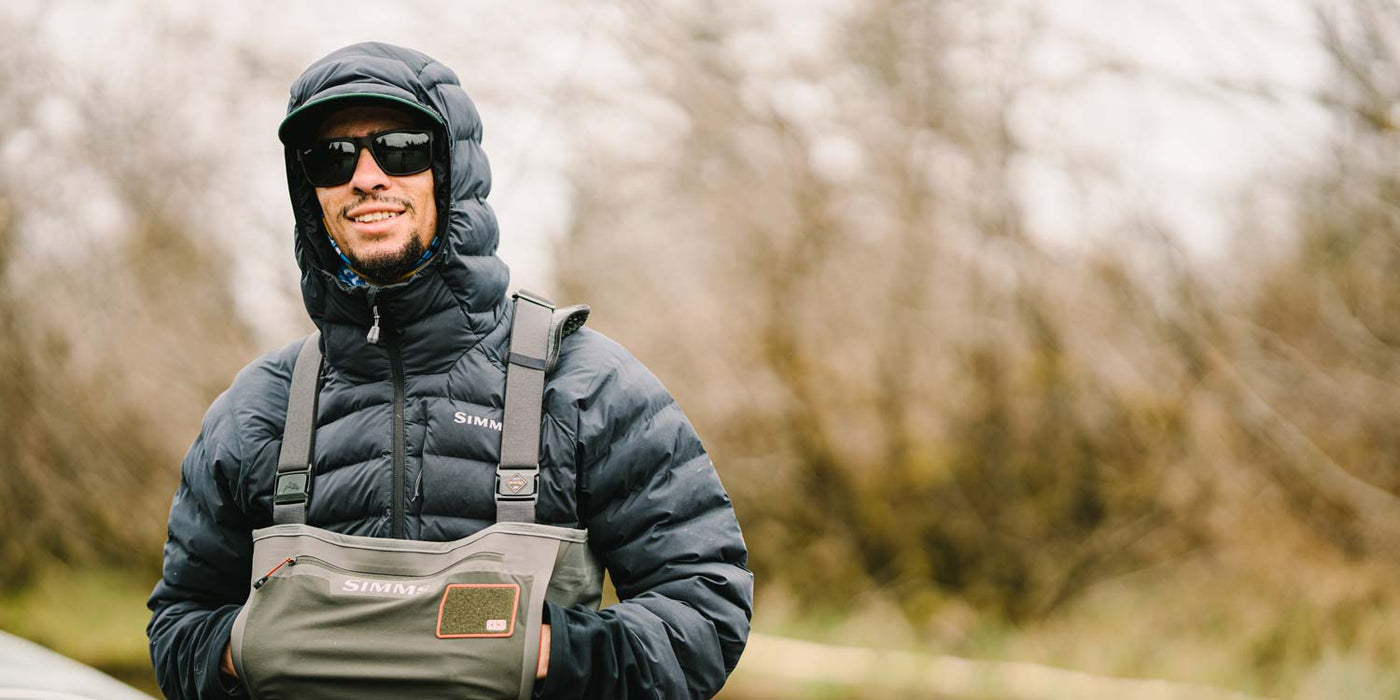
There's a saying in the fly-fishing industry:
there's no such thing as bad weather, just inappropriate clothing.
Many years ago, Simms ran a bumper sticker that said:
"Today's Weather Forecast? Who Cares."

What Are the Goals of Layering?
Quick Answer: Effective layering achieves three critical objectives: moving moisture away from your skin, keeping elements out while trapping warmth, and allowing complete freedom of movement even in harsh conditions.
The three goals of proper layering are:
- Moisture Management - Move perspiration away from your skin and out through the layers
- Thermal Protection - Keep wind, rain, and cold out while trapping body heat
- Freedom of Movement - Allow unrestricted casting and wading in all conditions
Key Principles for Successful Layering
Layering is simple, keep it that way. Use fit-for-purpose clothing in their appropriate layers and avoid bulk. Make sure your layers can be shed when it warms up or added back when temperatures drop. Each layer is critical: dropping any one of them can cause the system to break down and negate the warmth offered by other layers.
Important: Each layer should be fit-for-purpose and positioned as close to the next layer as possible, preventing cold air from entering between layers. Layers should move or slide over each other freely without restricting movement.
The Four Essential Layers

Layer 1: What Should I Use as a Base Layer?
Quick Answer: Your base layer should be a form-fitting, moisture-wicking garment made from polypropylene with spandex or bamboo fabric. Its sole purpose is lifting moisture away from your skin, it should NOT provide insulation.
The Base Layer's Purpose
This is your on-skin layer designed specifically to lift moisture away from your body, keeping you comfortable throughout the day.
✓ DO:
- Use a fit-for-purpose base layer that performs one function only: moisture management
- Choose form-fitting garments that allow other layers to slide over easily
- Select materials like polypropylene with spandex or bamboo fabric
- Consider bamboo base layers for their natural odour resistance (can be worn multiple times between washes)
✗ DON'T:
- Use base layers with insulating properties, they can cause overheating when conditions change
- Wear loose-fitting base layers that trap cold air
- Choose cotton or cotton-blend base layers (see "What to Avoid" section below)
- Add unnecessary bulk at this foundational layer

Layer 2: How Do I Choose Insulating Layers?
Quick Answer: Use two lightweight, form-fitting fleece garments rather than one heavy fleece. Multiple thin layers trap more heat by creating air pockets between them while remaining less bulky and more adaptable to changing conditions.
Understanding Insulation
Generally speaking, fleece garments provide warmth. The key principle: two lightweight fleece garments perform better than one thick garment.
✓ DO:
- Use form-fitting fleece garments (yes, multiple garments!)
- Combine two lightweight fleece pieces or one lightweight with one midweight
- Understand the theory: as garments layer together, they create air pockets that trap heat more effectively
- Choose fleece that slides easily over your base layer
✗ DON'T:
- Wear loose-fitting fleece that allows cold air penetration
- Rely on a single heavy fleece garment
- Compromise the insulating properties by using oversized garments
- Forget that proper fit is essential for thermal efficiency

Layer 3: What Is a Barrier Layer and Why Do I Need One?
Quick Answer: A barrier layer (typically a puff jacket) creates a buffer between your insulating fleece and the cold outer environment. Use Prima Loft-filled jackets rather than down, as synthetic insulation maintains warmth when wet and doesn't lose loft under compression.
The Barrier Layer's Role
This layer keeps your insulating layer away from the cold and maintains the thermal barrier you've created.
✓ DO:
- Use a form-fitting puff jacket that slides smoothly over your fleece layers
- Choose Prima Loft fill for its excellent warmth-to-wetness ratio
- Select garments that shed water effectively
- Ensure the jacket allows the insulation to maintain its full loft
✗ DON'T:
- Compress the loft by wearing a garment that's too small
- Choose goose or duck down (retains water, slow drying, low warmth-to-wetness ratio, loses loft under shell layers)
- Wear a shell layer that's too tight over the barrier layer
- Overlook the importance of proper fit at this critical layer

Layer 4: How Should My Shell/Outer Layer Perform?
Quick Answer: Your shell layer must be waterproof, windproof, breathable, and packable. It should have adjustable cuffs, a high neck, a hood, and should NEVER be tucked into your waders, always wear it over the top of your waders.
The Shell's Critical Function
This outermost layer keeps elements out, whether wind, rain, sleet or snow, while allowing moisture to escape.
✓ DO:
- Choose a shell that is waterproof, windproof and breathable
- Ensure it's lightweight and packable for versatility
- Look for adjustable cuffs, high neck, and functional hood
- Select shells with large cargo pockets for on-water gear storage
- Wear the shell OVER the top of your waders (never tucked in)
- Purchase a properly fitted shell—not oversized
✗ DON'T:
- Buy an oversized shell that lets cold air circulate inside
- Tuck your shell into your waders (this increases air distribution and reduces warmth)
- Compromise on breathability, you need moisture to escape
- Forget that this layer faces the harshest conditions

What Should I Wear Under My Waders?
Quick Answer: Wear tapered fleece pants or cycling-style tights to reduce bulk in the lower leg. Use properly sized, loop-knit thermal socks over lightweight nylon liner socks. Never wear cotton, denim or garments with metal zippers under waders.
Recommended Under-Wader Clothing
✓ DO:
- Use tapered garments to reduce bulk in lower legs (e.g., Simms Waderwick fleece pants)
- Wear cycling-style on-skin tights as an alternative
- Choose loop-knit thermal long socks in the correct size
- Layer a lightweight nylon sock inside your thermal sock (moisture management)
- Ensure your over-bootie is oversized so it doesn't compress the thermal sock's loop-knit structure
- Follow the layering principles: base layer, then insulating layer, then waders
✗ DON'T:
- Wear cotton in any form (extremely low warmth-to-wetness ratio—loses 80% of warmth when only 20% wet)
- Use denim/jean material—responsible for 40% of global wader failures
- Wear garments with copper studs or metal hardware
- Use hiking socks (often contain cotton and are too short)
- Wear any garments with metal zippers (sharp edges destroy wader fabrics)
- Use garments with plastic zippers unless absolutely necessary
- Wear regular pants that bunch at the ankles
Why These Restrictions Matter
- Cotton's Fatal Flaw: When cotton is only 20% wet, it loses 80% of its insulating properties. Compare this to angora or merino, which retain 90% of warmth even when 90% wet
- Denim's Double Danger: Highly abrasive (more so when wet) and usually features copper studs that puncture wader material
- Metal Components: Zippers and studs have sharp edges that can tear breathable membranes and create leak points

How Do I Properly Put On and Remove Waders?
Quick Answer: Always sit down when putting on or removing waders. Work the stockingfeet on carefully while seated, then stand to pull up. Never stand on the stockingfoot with your other foot or pull waders on while standing—this causes 40% of seam failures.
Putting Waders On (Step-by-Step)
- Always sit down before starting
- Work your feet into the waders until they're halfway into the stockingfeet at an angle
- Grab the waders at the back of each ankle
- Work the stockingfeet completely onto your feet
- Once both feet are secure, stand and work the waders up your legs and body until fully on
- Adjust chest straps and ensure comfortable fit
Critical Rule: Never stand in the waders and pull them on like regular pants. This creates excessive stress on seams and causes premature leaking.
Taking Waders Off (Step-by-Step)
- Always sit down before starting
- Work the waders down from your chest to your legs
- Grip the ankles/heels of the waders firmly
- Work them off both feet carefully
- Waders can then be removed easily without seam stress
Critical Rule: Never stand on the front or back of the stockingfoot with your other foot while removing the opposite foot. This creates excessive seam stress and will cause leaks in the toe area or where neoprene joins the breathable membrane.
Protect Your Investment
Always stand on a mat or similar protective surface when putting on or removing waders. This protects the neoprene stockingfeet from sharp objects on the ground that could puncture the material.

How Often Should I Wash Technical Garments?
Quick Answer: Wash fleece every 2-4 wears, shells every 4-8 wears, and waders every 6-10 wears using specialized detergent. Regular washing maintains breathability, DWR (Durable Water Repellency) coating and extends garment life.
Washing Frequency Guidelines
Always read and follow washing instructions on garment care labels. If instructions are missing, check the manufacturer's website or contact them directly.
Recommended washing intervals:
- Fleece Garments: Every 2-4 wears
- Jackets and Shells: Every 4-8 wears
- Waders: Every 6-10 wears
- Wool Garments: Every 3-6 wears (naturally antibacterial, resist odour buildup)
Why Regular Washing Matters
Dirt, body oils and residue clog the fabric's pores, reducing breathability and compromising the DWR coating. Regular washing with proper products maintains performance and significantly extends garment life.
What Is the Correct Way to Wash Technical Garments?
Quick Answer: Use a clean washing machine on delicate cycle at 40°C maximum with technical liquid detergent (like Nikwax Tech Wash). Close all zippers and snaps, don't overload, and follow with TX Direct treatment to restore water repellency.
Pre-Wash Preparation
Step 1: Clean Your Washing Machine
Before washing technical garments, thoroughly clean your washing machine, including soap trays. Use washing machine cleaning products (available at hardware stores or supermarkets) to remove soap scum and contaminants from the drum and components. This prevents contamination of your technical fabrics.
Step 2: Prepare Garments
- Close all snap clips and zippers
- Remove belts and detachable accessories
- Check pockets and empty them completely
- Do NOT turn waders or other items inside out
Washing Process
Step 3: Machine Settings
- Set to delicate/gentle wash cycle
- Temperature: 40°C maximum (104°F)
- Place only a few garments in the machine at once (avoid overloading)
Step 4: Detergent Selection
Use technical liquid detergent specifically designed for performance fabrics:
- Nikwax Tech Wash (recommended)
- Follow bottle instructions for correct dosage
- Never use regular laundry detergent (leaves residue)
- Avoid fabric softeners (destroy technical properties)
Step 5: Post-Wash Treatment
After washing, restore water repellency with:
- Nikwax TX Direct - renews DWR (Durable Water Repellency)
- Can be added in-wash or applied as spray-on treatment
- Essential for waders and rain shells
- Reapply after every 2-3 washes or when water stops beading
Special Considerations for Waders
Waders are the most technical garments you'll own. You're asking them to:
- Keep water out completely
- Allow body moisture to escape (breathability)
- Wear like casual pants
- Withstand abrasion, punctures, and constant flexing
Treat them with exceptional care. They deserve it.
Care Products
- Easy to use
- Tried and Tested
- Formulated for Performance
- Manufacturer Authorised
-

-

 Regular price From R 140.00 ZARUnit price /Unavailable
 -
 Sold outRegular price R 250.00 ZARUnit price /Unavailable
 -


-

 Regular price R 390.00 ZARUnit price /Unavailable


Frequently Asked Questions
Can I wear cotton under my waders?
Can I wear cotton under my waders?
No, never wear cotton under waders. Cotton has one of the lowest warmth-to-wetness ratios of any fabric. When cotton is only 20% wet, it loses 80% of its insulating capability. Additionally, cotton becomes highly abrasive when wet and will damage your waders from the inside, causing premature seam failure and fabric wear.
Why did my waders fail or start leaking?
Why did my waders fail or start leaking?
User error causes most wader failures. The most common causes are:
- Wearing denim (40% of failures globally) - Abrasive fabric with damaging metal studs
- Incorrect donning/doffing technique - Standing while pulling on/off creates seam stress
- Wrong undergarments - Cotton, metal zippers, or rough fabrics
- Improper storage - Folding instead of hanging, storing dirty/wet
- Inadequate maintenance - Not washing regularly or using wrong cleaning products
- Physical damage - Sharp objects, hooks or barbed wire.
What's the difference between breathable and non-breathable waders?
What's the difference between breathable and non-breathable waders?
Breathable waders use membranes (like Gore-Tex) that allow water vapor (perspiration) to escape while preventing liquid water from entering. This keeps you drier and more comfortable during active fishing.
Non-breathable waders (neoprene) trap all moisture inside, causing perspiration buildup. They're warmer in very cold water but less comfortable during active use.
What does DWR mean and why is it important?
What does DWR mean and why is it important?
DWR stands for Durable Water Repellency - a coating applied to fabric surfaces that makes water bead up and roll off rather than soaking in. When DWR is functioning properly, water forms droplets and slides off the fabric.
Why it matters: When DWR fails, fabric "wets out" (absorbs water on the surface), which:
- Blocks breathability (trapped moisture can't escape)
- Makes garments heavier
- Reduces insulation effectiveness
- Causes you to feel cold and clammy
Restoration: Reapply DWR treatment (like Nikwax TX Direct) every 2-3 washes or when you notice water no longer beading on the surface.
Can I repair small leaks myself?
Can I repair small leaks myself?
Yes, small punctures and tears are easily repairable:
For small punctures or pinholes:
- Use Aquaseal FD adhesive
- Clean and dry the area thoroughly
- Apply thin layer over damage
- Allow 8-12 hours to cure
For seam leaks:
- Use Seam Grip SIL
- Apply along the leaking seam on the inside
- Smooth with applicator
- Allow to dry completely
For larger tears: Consider professional repair or contact the manufacturer. Many brands offer repair services.
What temperature rating do I need for my layering system?
What temperature rating do I need for my layering system?
There's no single "rating" because conditions vary. Instead, consider:
Cold conditions (below 10°C):
- Full 4-layer system with midweight fleece
- Thermal socks and base layers
- Barrier layer (puff jacket)
- Shell layer
Moderate conditions (10-20°C):
- Base layer and lightweight fleece
- Shell layer as needed
- Can remove barrier layer
Warm conditions (above 20°C):
- Base layer may be sufficient
- Lightweight shell for rain protection
- Focus on sun protection
Pro tip: Layer systems are adaptable. Carry extra layers and adjust based on activity level and weather changes.
How tight should my waders fit?
How tight should my waders fit?
Waders should fit comfortably without restricting movement:
- Chest/torso: Snug but not tight, allows base and insulating layers underneath
- Legs: Room for layering but not baggy (excess material increases water drag)
- Stockingfeet: Should fit your boot size when wearing thermal socks
- Shoulder straps: Adjusted to prevent sagging but not overtightened
Important: Try on waders while wearing your typical layering system. Fit will change significantly based on underlayers.
Can I use regular laundry detergent on my waders?
Can I use regular laundry detergent on my waders?
No, never use regular laundry detergent on technical garments. Standard detergents:
- Leave residue that clogs fabric pores
- Destroy DWR coatings
- Reduce breathability significantly
- Can damage membrane structures
Always use technical garment detergent (like Nikwax Tech Wash) specifically formulated to clean without damaging performance fabrics.
How long should quality waders last?
How long should quality waders last?
With proper care, quality waders should last 5-10+ years. Longevity depends on:
- Usage frequency - Weekend anglers vs. daily guides
- Care practices - Regular washing, proper storage
- Usage conditions - Rocky rivers vs. soft lake bottoms
- Donning/doffing technique - Sitting vs. standing
- Undergarments - Appropriate vs. damaging fabrics
Professional guides who wear waders 200+ days annually with proper care typically get 3-5 years. Recreational anglers with proper maintenance often exceed 10 years.
Final Thoughts: The Philosophy of Layering
Mastering layering isn't about having the most expensive gear—it's about understanding how garments work together as a system. Each layer has a specific job. When you respect that purpose and maintain your gear properly, you'll stay comfortable in any condition.
Remember Simms' old bumper sticker wisdom:
"Today's Weather Forecast? Who Cares."
With proper layering and wader care, you'll be ready for whatever the day brings, keeping you on the water longer and fishing more effectively.