

Stillwater Gear
South African stillwater fly fishing targets rainbow trout, brown trout and largemouth bass in dams, lakes and reservoirs. Dullstroom, the Eastern Cape and Mpumalanga's "Trout Triangle" host productive venues averaging 17 acres, regularly producing trout exceeding 4.5kg. The Drakensberg, Western Cape farm dams and Free State waters provide consistent opportunities throughout the year.
Stillwater fishing differs from rivers. Fish hunt actively rather than holding in feeding lanes, requiring systematic water column searching. Wind, clarity and insect activity shift constantly. Trout suspend mid-column or cruise weedbeds whilst bass patrol structure. Reading dam topography—channels, rock piles, drop-offs, weed growth—determines success.
Spring (September to November) and autumn (March to May) deliver peak conditions. Spring brings spawning trout into shallows, autumn triggers aggressive pre-winter feeding. Many stillwaters remain open year-round. Summer produces prolific damsel and dragonfly hatches creating technical midday opportunities.
This guide covers essential stillwater gear from rods to waders to float tubes. Recommendations span multiple price points for beginners and experienced anglers. Wading systems and float tubing receive detailed attention given their critical importance.
In This Gear Guide
- Fly Rods
- Fly Reels
- Fly Lines
- Leaders & Tippet
- Clothing & Sun Protection
- Bags, Packs & Vests
- Waders
- Float Tubing & Cautions
- Accessories & Tools
- Fishing Flies – Freshwater
- Frequently Asked Questions

Fly Rods
A 9- to 10-foot, 5- or 6-weight rod suits South African stillwater trout and smallmouth yellowfish. Both weights handle any trout size found in SA waters. The 6-weight's advantage lies in punching casts through wind and turning over larger flies more efficiently. Fast-action rods excel in stillwater conditions where distance and wind-cutting ability matter. Nine- to 10-foot length keeps line high above water, particularly important fishing from float tubes where you sit low.
For bass, carp and largemouth yellowfish, step up to a 7-weight. These species demand more power for bulky flies, and carp and largemouth yellowfish are exceptionally strong fighters. Barbel require 8- or 9-weight rods due to their raw power. Four-piece designs ease transport to remote dams.
Recommended Specifications:
- Line weight: 5-6 weight for trout and smallmouth yellowfish; 7 weight for bass, carp and largemouth yellowfish; 8-9 weight for barbel
- Length: 9 to 10 feet
- Action: Fast
- Features: Four-piece for travel convenience

Fly Reels
A reliable reel with smooth drag handles powerful stillwater runs. Stillwater trout reach 2-4kg, with trophies exceeding 4.5kg. Large arbor reels retrieve line faster during rapid direction changes and reduce line memory. Sealed or semi-sealed drags protect against moisture and grit, critical when float tubing. Load 100 to 150 metres of 20lb backing. Fot larger species, increase to 30lb backing.
Balance between rod and reel improves casting comfort. Match reel size to rod weight—a 5/6 reel suits both 5- and 6-weight rods. Quality construction ensures reliability whilst smooth drag prevents tippet breakage.
Recommended Specifications:
- Size: match to rod
- Drag: Sealed or semi-sealed disc drag, 2-3kg
- Arbor: Large arbor design
- Construction: Machined aluminium
- Backing capacity: 100-150 metres of 20lb backing. Increase to for larger speceis

Fly Lines
A weight-forward floating line serves as primary workhorse. This taper loads quickly, delivers distance and handles dry flies to weighted nymphs. Floating lines fish the top two metres where fish feed most. Cold-water formulations remain supple in highland conditions, preventing coiling. Floating line versatility suits beginners whilst remaining effective for experienced anglers.
Complete stillwater success demands depth versatility. Intermediate clear or camouflage line fishes just below surface without spooking fish. Full sinking lines (type 3 to type 6) probe deeper water during bright conditions. Full sinking lines maintain depth better than sink-tips during retrieves.
Recommended Specifications:
- Taper: Weight-forward
- Type: Floating (primary), intermediate and sinking lines (secondary)
- Weight: Match to rod
- Coating: Cold-water formula for South African highland conditions

Leaders & Tippet
Stillwater leaders need 9- to 12-foot length to separate fly from line in clear water. Tapered leaders turn over smoothly with minimal splash. For subsurface fishing, fluorocarbon offers low visibility underwater (refractive index 1.4 matches water at 1.33) and faster sink rate from higher density. These properties matter in South Africa's clear stillwaters.
Tippet strength balances fish size with presentation. For trout, 2X to 4X (4-8lb, 2-4kg) handles most situations—2X for streamers, 4X for small nymphs during hatches. Other species demands heavier tippets, typically 1X to 0X (8-10lb, 3.6-4.5kg), particularly around structure. Nylon provides shock absorption for topwater and dry flies, fluorocarbon works best subsurface.
Recommended Specifications:
- Leader length: 9-12 feet
- Tippet strength: 2X-4X for trout (2-4kg), 1X-0X for other species (4-6kg)
- Material: Fluorocarbon for subsurface (low visibility, sink rate), nylon for surface
- Note: Carry multiple strengths

Clothing & Sun Protection
Highland stillwaters experience cold mornings warming significantly by midday. Start with merino wool base layer (200-260gsm) that wicks moisture and regulates temperature. Add lightweight fleece or synthetic mid-layer, easily removed as conditions warm. A waterproof-breathable shell protects against wind and sudden weather changes. Quick-dry fishing pants or convertible trousers offer versatility.
Sun protection matters on stillwaters where reflection intensifies UV exposure. Long-sleeve sun hoody with UPF 50+ rating covers arms and torso whilst breathing. Wide-brimmed hats shade face and neck. Polarised sunglasses with copper or amber lenses cut glare, revealing subsurface structure and cruising fish.
Recommended Items:
- Base layer: Merino wool (200-260gsm) or synthetic
- Mid-layer: Lightweight fleece or synthetic insulation
- Sun hoody with UPF 50+ protection
- Quick-dry fishing pants or convertible trousers
- Wide-brimmed hat with neck protection
- Polarised sunglasses (copper or amber lenses, UV 400)
- Buff or neck gaiter
- Lightweight waterproof-breathable jacket

Bags, Packs & Vests
Float tubes feature large cargo pockets providing ample storage for flies, tippet, tools and accessories. However, many anglers prefer vests or chest packs for versatility—walking banks when conditions favour shore fishing, then switching to float tube when conditions change. Chest packs position gear within easy reach whilst keeping hands free. Vest systems offer maximum storage for extensive fly selections. Modern vests incorporate mesh panels for breathability whilst lumbar packs distribute weight comfortably for bank fishing.
A waterproof dry bag becomes essential for float tubing. Most tubes take on some water during windy conditions, requiring proper protection for spare clothing, electronics and other equipment you want kept dry. Ensure your chosen pack or vest mounts securely without interfering with fin movements when tubing.
Recommended Features:
- Waterproof or water-resistant material (IPX4 minimum)
- Multiple compartments for organisation
- Tool attachment points (D-rings, retractor mounts)
- Comfortable harness for all-day wear
- Style appropriate to method (chest pack or vest for versatility, waterproof dry bag essential for float tubing)

Waders
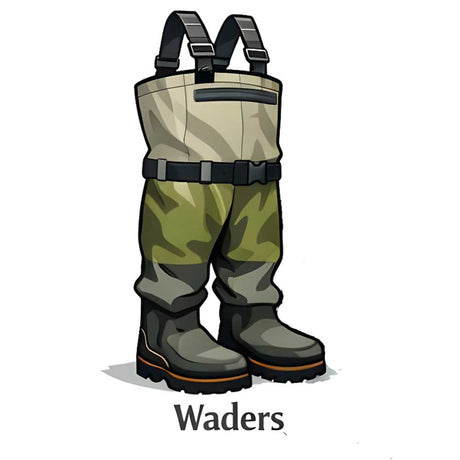
Breathable chest waders keep you dry and comfortable whilst accessing productive water. Technical membranes allow perspiration to escape whilst preventing water entry—neoprene waders trap moisture inside causing discomfort. Breathable waders reduce thermal transfer more effectively when properly layered underneath. Highland venues demand waders in spring and autumn. Follow proper layering principles—see our Layering and Wader Care guide for details.
Stockingfoot chest waders paired with neoprene dive booties create the ideal system. The bootie's rubber sole protects the wader stocking foot from punctures whilst reinforced toe and heel sections reduce wear. Reef dive booties feature "fin tabs"—heel bumps preventing fin straps from slipping during use. Purchase booties 2-3 sizes larger than normal shoe size to accommodate wader foot plus thick thermal socks without compressing the sock's loop-knit structure (compression destroys insulation). Use 200-260gsm merino or angora wool thermal socks, adjusting thickness to conditions. For extreme cold, two medium-weight sock layers outperform one thick layer. Never use cotton; it loses 80% warmth when 20% wet.
Recommended Features:
- Style: Breathable stockingfoot chest waders
- Material: Gore-Tex or quality breathable fabric (3-5 layer)
- Bootie system: Neoprene dive booties (3-5mm), sized 2-3 sizes over normal
- Bootie features: Rubber sole, reinforced toe/heel, fin tabs
- Thermal socks: Merino or angora wool (200-260gsm), multiple pairs
Note: Always use protective mat when donning/doffing - Underlayers: Base layer + thermal layer(s) per conditions, NEVER cotton

Float Tubes
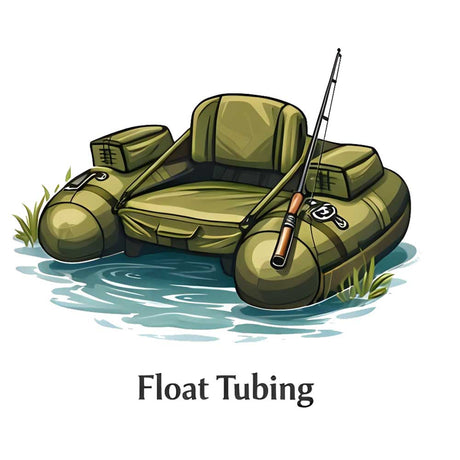
Float tubes revolutionise stillwater fishing by providing access beyond shore casting range. You reach water inaccessible from bank, fish parallel to weedbeds rather than perpendicular, and target channels and old river courses where trophy fish hold. Low profile reduces visibility for stealthy approaches. The Horizon Trout Stalker Float Tube Deluxe incorporates decades of design refinement into a purpose-built platform.
Look for inflatable air seats and backrests, not foam. Air provides superior comfort whilst avoiding thermal transfer—foam becomes hard in cold, creating discomfort and cold seat. The Horizon Trout Stalker includes raised inflatable seat and backrest keeping you higher and drier. Critical features: heavy-duty construction (420D nylon top/sides, 500D PVC bottom), heat seam-sealed urethane bladders, cargo pockets with rod holders, reinforced attachment points. Anchor system essential for fishing structure in wind—our systems feature float attachment and carabiner for quick release to chase fish before returning to position.
Recommended Features:
- U or V-shaped hull (no stabiliser bar needed)
- Inflatable air seat and backrest (NOT foam)
- Heavy-duty construction (420D+ nylon, 500D+ PVC bottom)
- Heat seam-sealed urethane bladders (multiple independent)
- Boston valves positioned avoiding line snags
- Multiple storage pockets with secure closures
- Built-in rod holders and D-rings
- Complete setup: Float tube, fins, booties, anchor system (2-3kg anchor, 10m 6mm paracord & float)

Float Tube Cautions
IMPORTANT: Temperature changes cause air expansion and contraction requiring adjustment.
Initial Setup:
- Inflate seat bladder FIRST, then main bladder
- The correct bladder inflation is when you can press your thumb about 1 to 1.5cm into the inflated bladder.
- NEVER step on uninflated tube, especially bladder edges (causes leaks)
Morning Setup (Cool at first, warming during the morning):
- Inflate seat bladder FIRST, then main bladder
- Under-inflate by 5-10% as the temperature rises, the bladders will expand
Midday (Warm to Hot):
- Release ~20% before leaving you boat next to the water over lunch time
- Sun expansion can rupture bladders or seams
- Check firmness, there should be plenty of room for expansion
Evening (warm at first, cooling during the afternoon):
- Over-inflate by 5-10% as temperature drops the bladder will contract
- Cold contracts air—bladders soften
- Adjust as conditions require
Post-Trip Care:
- Rinse with fresh water at trip end
- Dry completely preventing mould
- Check damage, repair immediately
- Store COMPLETELY DEFLATED in cool environment (thermal cycling damages bladders if stored inflated)
- Never place heavy objects on folded tubes
- Store in box or hang flat
Safety: Horizon Trout Stalker features three independent air bladders (main, seat, backrest). The main bladder is a urethane construction, and the seat and backrest use aircraft life vest construction. Probability of all three bladders failing simultaneously: approximately one in one billion. This redundancy eliminates need for additional flotation devices.

Accessories & Tools
Essential tools keep you fishing efficiently. Forceps or hemostats (10-15cm straight and curved) handle safe hook removal. Quality line nippers cut tippet cleanly. Retractor systems keep tools accessible—mount nippers, forceps and floatant on separate retractors. Waterproof fly boxes (foam or compartmentalised) protect flies whilst allowing quick selection. Carry 2-3 boxes organised by type: streamers, nymphs, dry flies.
Rubberised landing nets (40-50cm for trout, 50-60cm for bass) protect fish slime and reduce handling stress. Net depth should exceed expected fish length. Strike indicators, floatant and sinkant adjust presentation to match conditions.
Essential Accessories:
- Forceps/hemostats (10-15cm, straight and curved)
- Quality line nippers
- Retractors for tool management (3 minimum)
- Waterproof fly boxes (2-3 boxes)
- Rubberised landing net (40-60cm depending on species)
- Floatant and sinkant
- Strike indicators (various sizes)
- Headlamp for early/late fishing
- Thermometer

Fishing Flies
Woolly Buggers top South African stillwater fly boxes—this versatile pattern imitates leeches, baitfish and damselflies. Use olive, black, brown and orange in sizes #4 to #12. Damsel nymphs (Red-eyed Damsel, olive damsels) match abundant larvae, fished slowly along weedbeds in sizes #8 to #12. Dragonfly patterns like Papa Roach imitate larger prey, retrieved faster in sizes #6 to #10.
Buzzers (chironomid imitations) in sizes #14 to #18 match midge hatches in highland dams, fished static under indicators or slowly retrieved. Dry flies (Adams, DDD, hoppers, CDC patterns) cover surface feeding. Blobs and boobies in fluorescent colours act as pure attractors, particularly effective during winter. Carry patterns in various colours—black, olive, brown, orange, white—weighted and unweighted.
Essential Fly Patterns:
- Woolly Buggers (sizes #4-12, olive, black, brown, orange, weighted/unweighted)
- Damsel Nymphs - Red-eyed
- amsel, olive damsels (sizes #8-12)
- Dragonfly Patterns - Papa Roach, olive/brown dragons (sizes #6-10)
- Buzzers/Midges - black, red, olive (sizes #14-18)
- Dry Flies - DDD, Adams, Hoppers, CDC emergers (sizes #12-16)
- Streamers - Zonkers, Clouser Minnows (sizes #4-8)
- Blobs/Boobies - fluorescent orange, pink, chartreuse (sizes #8-10)
- Mrs Simpson (sizes #8-10)


 Regular price R 6,400.00 ZARUnit price


Horizon Tactical Freshwater Fly Fishing Rod
Regular priceFrom R 5,450.00 ZARUnit price


 Regular price R 23,250.00 ZARUnit price


Abel SDF Fly Fishing Reel (Sealed Drag Fresh)
Regular priceFrom R 17,500.00 ZARUnit priceVery low stock (1 unit)

Scientific Anglers Amplitude Smooth Anadro Stillwater Indicator Floating Fly Line
Regular price R 1,820.00 ZARUnit priceLow stock (3 units)

Scientific Anglers Sonar Clear Camo Intermediate Fly Line
Regular price R 1,820.00 ZARUnit priceLow stock (2 units)

Scientific Anglers Sonar Seamless Density Sinking Fly Line
Regular price R 1,820.00 ZARUnit price


Scientific Anglers Sonar Leader
Regular priceFrom R 360.00 ZARUnit price

TroutHunter Fluorocarbon Tippet
Regular price R 550.00 ZARUnit price


Icebreaker Merino 200 Oasis Thermal Leggings
Regular price R 1,800.00 ZARUnit price

 Sold out
Fishpond Flattops Wader Duffel
Regular price R 4,150.00 ZARUnit price


 Sold out
Fishpond Dakota Rod and Reel Case
Regular priceFrom R 5,050.00 ZARUnit price


Horizon Guide Breathable Zip Waders
Regular price R 5,850.00 ZARUnit price


 Regular price R 1,650.00 ZARUnit price


Horizon Float Tube Anchor System
Regular price R 1,250.00 ZARUnit price Regular price R 1,450.00 ZARUnit price


 Regular price R 250.00 ZARUnit price






Frequently Asked Questions
What rod weight do I need for stillwater fly fishing?
What rod weight do I need for stillwater fly fishing?
A 5- or 6-weight rod suits trout and smallmouth yellowfish, with both weights handling any trout size in SA. The 6-weight punches through wind better and turns over larger flies. For bass, carp and largemouth yellowfish, use a 7-weight. Barbel require 8- or 9-weight rods due to their power. Nine- to 10-foot length keeps line high above water—essential fishing from float tubes.
Where can I fly fish for stillwater trout in South Africa?
Where can I fly fish for stillwater trout in South Africa?
Dullstroom and Mpumalanga's "Trout Triangle" offer the highest concentration of quality venues. Eastern Cape's Stormberg and Winterberg regions, Rhodes, KwaZulu-Natal's Drakensberg, Western Cape farm dams and Sterkfontein Dam in Free State all provide excellent stillwater opportunities. Most venues operate on permit systems—contact directly or book through lodges.
What flies work best for South African stillwater trout?
What flies work best for South African stillwater trout?
Woolly Buggers in olive, black and orange (sizes #4-12) dominate. Red-eyed Damsel and olive damsel patterns work along weedbeds in sizes #8-12. Papa Roach dragonfly pattern produces explosive strikes. Buzzers (sizes #14-18) match midge hatches. Adams, DDD and hopper patterns trigger surface takes. Fluorescent blobs and boobies work as attractors, particularly during winter.
What is the best time of year to fly fish stillwater in South Africa?
What is the best time of year to fly fish stillwater in South Africa?
Spring (September-November) and autumn (March-May) deliver peak conditions. Spring brings spawning trout into shallows whilst cooler water triggers active feeding. Autumn provides aggressive pre-winter feeding. Many stillwaters remain open year-round. Winter offers technical spawning fishing. Summer produces prolific damsel and dragonfly hatches creating exciting midday opportunities.
Do I need a special reel for stillwater fly fishing?
Do I need a special reel for stillwater fly fishing?
Stillwater fish fight powerfully in short bursts with sudden direction changes. A reel with smooth drag prevents tippet breakage. Large arbor design retrieves line faster, maintaining connection when fish run toward you. Match reel to rod weight. Sealed or semi-sealed drags protect against moisture when float tubing. Budget R4,000-R7,000 for reliable performance.
Can beginners catch fish on stillwater with fly gear?
Can beginners catch fish on stillwater with fly gear?
Yes. South African stillwaters offer forgiving environments for developing skills. Fish hunt actively giving more opportunities. Woolly Buggers and damsel nymphs tolerate imperfect presentations. Float tubes position beginners in productive water without requiring long casts. Many commercial venues stock regularly ensuring consistent action. Start with a 6-weight outfit, floating line and simple retrieves.
Why are breathable waders better than neoprene for stillwater fishing?
Why are breathable waders better than neoprene for stillwater fishing?
Breathable waders allow perspiration to escape whilst preventing water entry, keeping you dry and comfortable. Neoprene traps moisture causing discomfort. Breathable waders reduce thermal transfer more effectively when properly layered. For stillwater fishing where you're moving between spots or kicking in float tubes, breathability becomes essential.
What makes float tubing essential for stillwater success?
What makes float tubing essential for stillwater success?
Float tubes provide access to water unreachable from shore. More importantly, they allow fishing parallel to weedbeds where trout cruise—shore anglers can only cast perpendicular. Target channels, old river courses and specific structure with precision. Low profile reduces fish awareness. Combined with anchor system (float attachment, quick-release carabiner), you hold position in wind and return to productive spots.
How do I choose the right neoprene booties for float tubing?
How do I choose the right neoprene booties for float tubing?
Purchase Reef dive booties 2-3 sizes larger than normal shoe size to accommodate wader foot plus thick thermal socks without compression. Compression destroys sock insulation leaving feet cold. Look for 3-5mm neoprene with rubber sole protection, reinforced toe/heel, and "fin tabs" on heel preventing fin straps from slipping during use.
What's the most common float tube mistake that causes damage?
What's the most common float tube mistake that causes damage?
Stepping on uninflated tubes, particularly bladder edges, causes urethane pinching leading to leaks. Always inflate seat first, then main bladder, before entering. Never stand on tube whilst inflating. Storing tubes inflated causes thermal cycling damage as temperature fluctuations stress urethane. Always store completely deflated in cool environment.