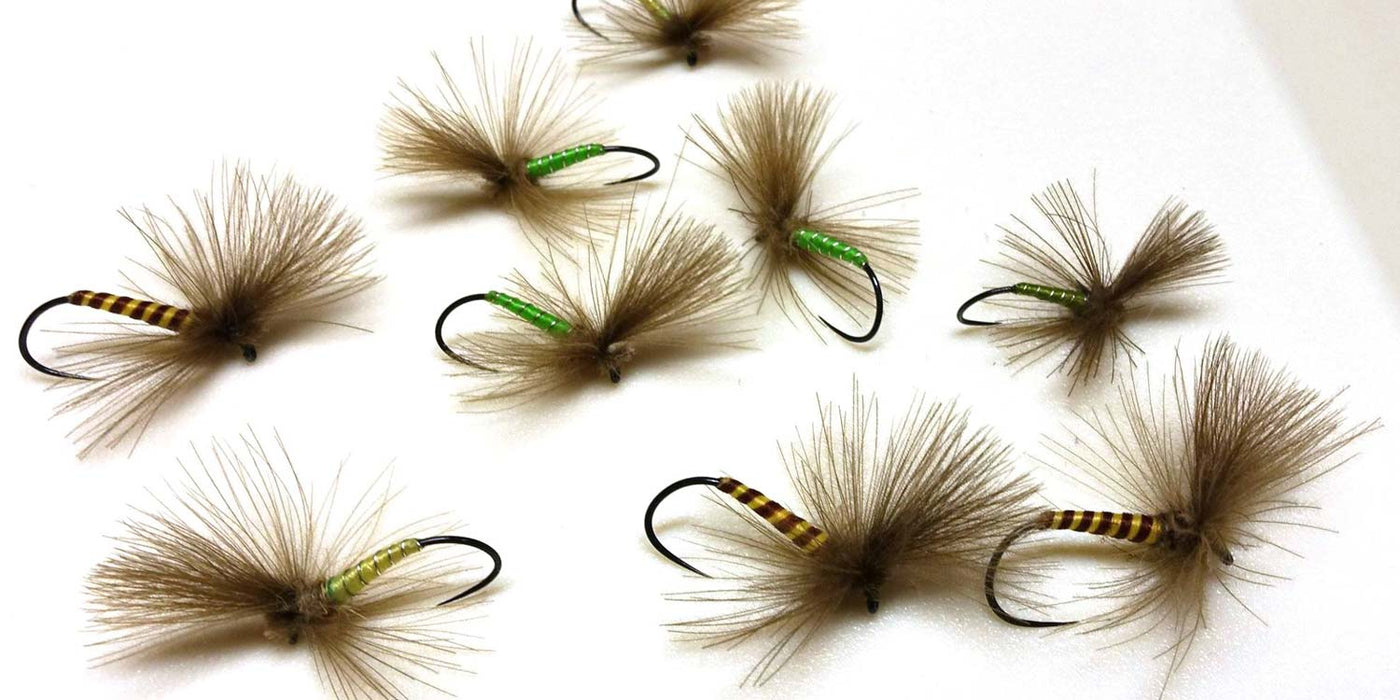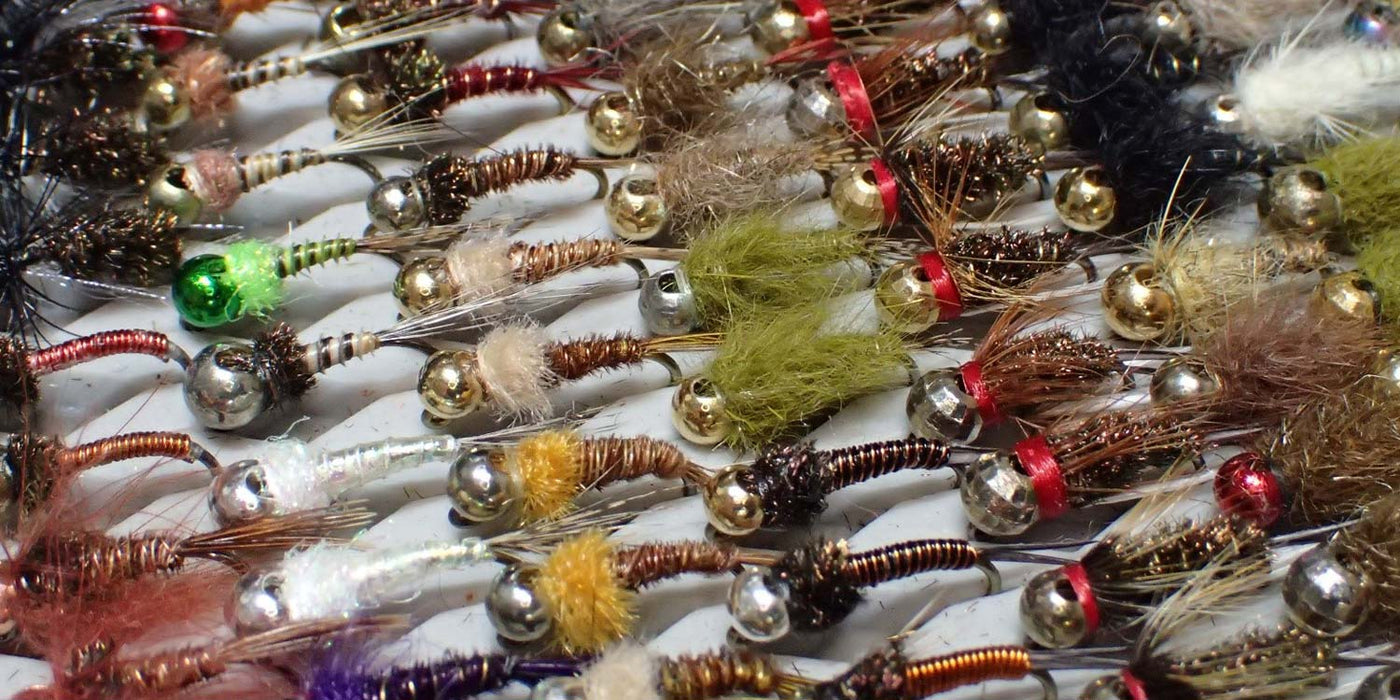
Since 1969, Tiemco hooks have set the benchmark for quality, design and performance in fly tying. Their meticulous attention to detail, innovative designs, and unwavering commitment to excellence have made them the choice of professional guides, competition anglers, and passionate fly tiers worldwide.
At Frontier Fly Fishing, we've trusted Tiemco hooks since day one, not just because of their legendary reputation, but because we've seen them perform flawlessly on the water, year after year.

Why Tiemco Hooks?
Japanese Precision & Quality Steel
Tiemco hooks are crafted from premium Japanese steel using advanced metallurgy that ensures optimal strength without sacrificing sharpness. The rigorous quality control means every hook meets exacting standards.
Chemically Sharpened Points
Through a specialized chemical process, Tiemco achieves needle-sharp points that penetrate quickly with minimal pressure, increasing your hookup rate significantly.
Proven Performance
From delicate size 28 midges to heavy saltwater streamers, Tiemco hooks hold their point, resist bending under pressure, and consistently deliver when it matters most.
Understanding Hook Categories


Hook Sizing Explained
Understanding hook sizes can seem confusing at first, but it follows a logical system:
Standard Sizes (Numbers Only)
As the number increases, the hook gets smaller:
- Size 8 is larger than Size 10
- Size 10 is larger than Size 12
- Size 12 is larger than Size 14
Aught Sizes (Number + /0)
As the number increases, the hook gets larger:
- Size 2/0 is larger than Size 1/0
- Size 3/0 is larger than Size 2/0
- Size 4/0 is larger than Size 3/0
Tiemco's TMC5200 Standard
Tiemco uses an internal reference standard (the never-released TMC5200) to ensure consistency across their entire range. This means a size 12 TMC 100 and a size 12 TMC 3761 will have identical gap measurements, making it easier to substitute hooks while maintaining proper proportions.

Wire Strength (X-Heavy / X-Fine)
The "X" rating tells you how the wire gauge compares to the standard:
X-Heavy Hooks
Uses thicker wire from a larger hook size:
- 2X Heavy size 12 = wire gauge of standard size 10
- 3X Heavy size 14 = wire gauge of standard size 11
Use When: Targeting strong fish, need extra durability, want more weight
X-Fine Hooks
Uses thinner wire from a smaller hook size:
- 1X Fine size 12 = wire gauge of standard size 13
- 2X Fine size 12 = wire gauge of standard size 14
Use When: Delicate presentations, floating dry flies, sparse patterns

Shank Length (X-Long / X-Short)
The shank length determines the body space available for tying:
X-Long Shanks
- 2X Long size 12 = shank length of standard size 10
- 3X Long size 12 = shank length of standard size 9
Perfect For: Streamers, hoppers, stoneflies, damselflies, elongated baitfish
X-Short Shanks
- 1X Short size 12 = shank length of standard size 13
Perfect For: Compact patterns, beetles, ants, eggs, smaller profile nymphs

Hook Point Technology
Standard Points
Traditional needle-sharp points work for most applications.
Spear Point (SP)
Tiemco's innovative design features:
- Hollowed curve with triangulated edges
- Blade-like penetration for instant hooksets
- "Slow-tapered" design reduces penetration resistance
- Small "apron" provides barb-like holding power
- Self-sharpens more easily than standard points
- Helps streamers track straighter in the water
Best For: Barbless applications, quick-striking fish, streamers

Chemical Sharpening Process
After forging and heat treatment, Tiemco hooks undergo a chemical bath that preferentially "attacks" the thinner point area, creating an incredibly sharp, durable edge that maintains its keenness longer than mechanically sharpened hooks.
Hook Gape
The distance between the point and shank affects hooking percentage:
Standard Gape: Balanced for most applications
Wide Gape: Increased hooking ability, especially with short-striking fish
Extra Wide Gape (Stinger): Maximum gape for aggressive fish and larger patterns

Barbed vs. Barbless
Barbed Hooks
The small barb behind the point increases holding power but makes release more difficult and can cause more damage to fish.
Barbless Hooks
Easier, faster releases with less harm to fish. Despite common belief, barbless hooks actually have similar landing rates when you maintain proper line tension.
Conservation Tip: Many waters now require barbless hooks. If you fish both barbed and barbless waters, consider buying barbless hooks and keeping separate boxes.

Forging
After initial manufacture, hooks are forged (compressed) to:
- Increase strength without adding weight
- Create flatter cross-sections that resist bending
- Improve overall durability
Popular Tiemco Hook Models Guide
The Essentials (Start Here)
TMC 100 - The World's Most Popular Dry Fly Hook
TMC 2488- Light Wire Scud Hook
TMC 3761 - Go-To Nymph Hook
TMC 5262 - Classic Streamer Hook
-
 Regular price R 60.00 ZARUnit price /Unavailable
 -
 Regular price R 65.00 ZARUnit price /Unavailable
 -
 Regular price R 70.00 ZARUnit price /Unavailable
 -
 Regular price R 75.00 ZARUnit price /Unavailable


Specialty Dry Fly Hooks
TMC 101 - Straight Eye Dry
TMC 102Y - The "Hookup" Hook
TMC 2301 - The "Hopper" Hook
TMC 5212 - Long-Body Dry
-
 Regular price R 60.00 ZARUnit price /Unavailable
 -
 Regular price R 65.00 ZARUnit price /Unavailable
 -
 Regular price R 70.00 ZARUnit price /Unavailable
 -
 Regular price R 65.00 ZARUnit price /Unavailable


Nymph Specialists
TMC 200R - The Classic Curved Nymph
TMC 2488 - Curved Scud Hook
TMC 2499SP-BL - Heavy Duty Barbless
TMC 413J- The Classic Curved Nymph
-
 Regular price R 65.00 ZARUnit price /Unavailable
 -
 Regular price R 70.00 ZARUnit price /Unavailable
 -
 Regular price R 110.00 ZARUnit price /Unavailable
 -
 Regular price R 110.00 ZARUnit price /Unavailable


Streamer Powerhouses
TMC 300 - Long Streamer Hook
TMC 5263 - The Bugger Hook
TMC 800S - Saltwater Standard
TMC 9395 - Straight Eye Streamer
-
 Regular price R 100.00 ZARUnit price /Unavailable
 -
 Regular price R 75.00 ZARUnit price /Unavailable
 -
 Regular price R 80.00 ZARUnit price /Unavailable
 -
 Regular price R 95.00 ZARUnit price /Unavailable


Hook Care & Maintenance
Inspect Regularly
Check for bent points, rust or dulled edges. Replace compromised hooks immediately.
Sharpen When Needed
Use a fine diamond file or ceramic stone. Test sharpness on your thumbnail, it should "bite" without sliding.
This is only a guide for sharpening hooks; chemically sharpened hooks are notoriously difficult to sharpen, rather discard the fly and use another one.
Proper Storage
- Keep hooks in dry conditions
- Use hook cases or magnetic patches
- Separate freshwater from saltwater hooks
- Rinse saltwater hooks after use
Handle Carefully
- Don't drop hooks on hard surfaces
- Avoid crushing barbs in the vice—use pliers before tying
- Store tied flies in compartmented boxes to prevent hook damage
- Never try and change the shape of the hook or the eye. The forging process does not allow the wire to be bent into another shape.
Frequently Asked Questions
Are Tiemco hooks worth the price?
Are Tiemco hooks worth the price?
At Frontier Fly Fishing, we've priced Tiemco hooks competitively with other brands—but you're getting a significantly better product. The superior Japanese steel, consistent sizing, exceptional sharpness, and reliable performance mean fewer lost fish and hooks that stay sharp longer. You're getting premium quality at a fair price, which makes them excellent value for serious fly tiers.
Should I buy barbed or barbless hooks?
Should I buy barbed or barbless hooks?
We prefer barbed hooks for better hookup ratios and fish retention during the fight. Tiemco's micro-barb design provides excellent holding power while being small enough that careful removal causes minimal damage to fish. If you're fishing barbless-only waters, a quality pair of forceps can quickly crush the barb at the water's edge before you start fishing. This gives you the flexibility to fish anywhere while maintaining the hooking advantage of barbed hooks during tying and storage.
Can I substitute other brands for Tiemco hooks in patterns?
Can I substitute other brands for Tiemco hooks in patterns?
Yes, but pay attention to the specifications (length, wire gauge, gape). A TMC 100 equivalent would be a standard dry fly hook with similar proportions. However, you may notice differences in sharpness, consistency, and overall quality. Our staff can help identify suitable alternatives if a specific Tiemco model is unavailable.
What's the difference between TMC 100 and TMC 101?
What's the difference between TMC 100 and TMC 101?
The TMC 101 has a straight eye (ideal for smaller flies and no-hackle patterns), while the TMC 100 has a down-eye (more traditional dry fly design). Both are excellent dry fly hooks, but the straight eye on the TMC 101 creates a cleaner silhouette on size 16 and smaller patterns.
How do I know when to replace or re-sharpen a hook?
How do I know when to replace or re-sharpen a hook?
Test sharpness by gently dragging the point across your thumbnail—it should "bite" and catch without pressure. If it slides, it needs sharpening. Replace hooks that are bent, rusted, or have damaged points. After catching fish in rocky areas or hitting underwater structure, always check your hook. A dull hook dramatically reduces your landing percentage, so it's worth checking regularly throughout your fishing day.
Do I really need different hook models, or can I use one "universal" hook?
Do I really need different hook models, or can I use one "universal" hook?
While you can get by with a few versatile models (TMC 100, TMC 3761, TMC 5262), specific hook designs significantly improve fly performance and durability. Specialty hooks are worth having for patterns you tie frequently. Start with the essentials for your most common fishing situations, then expand your collection as you explore new patterns and techniques.