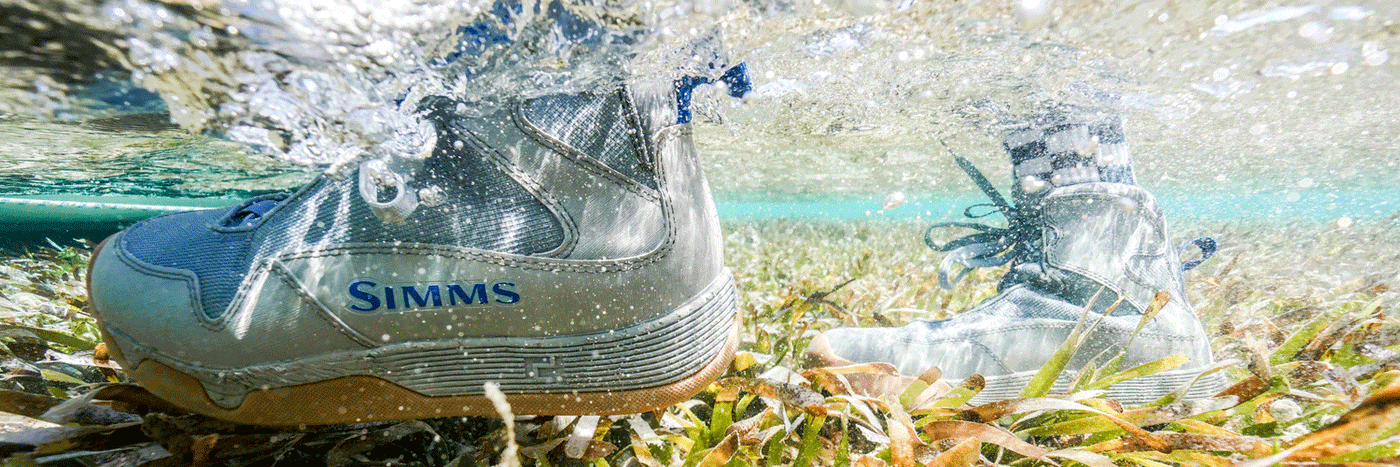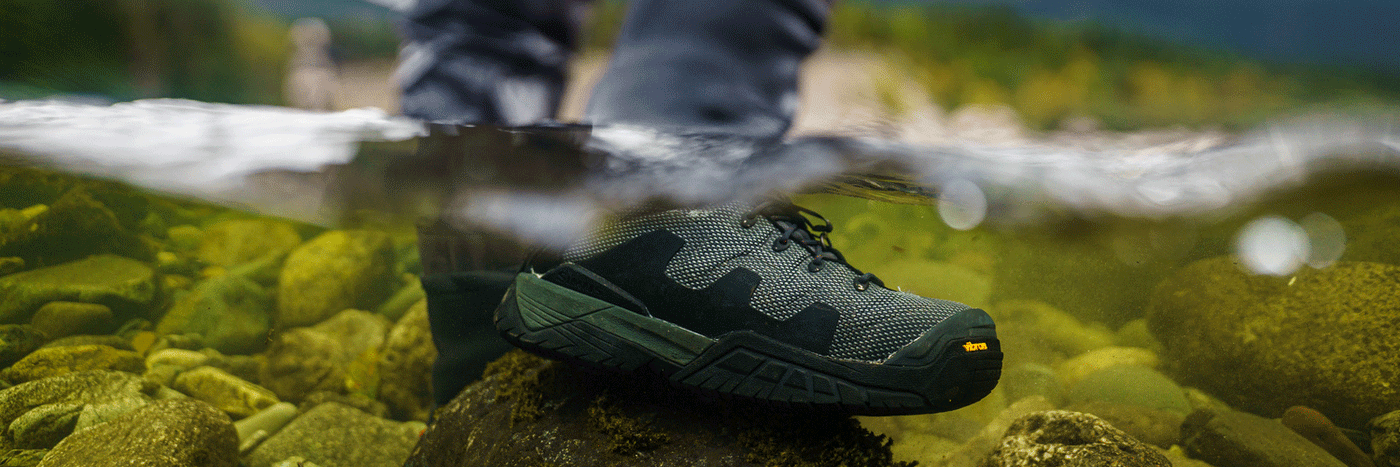
For years, fly fishermen have encountered delamination issues with wading boots and blamed it on the quality of the boots. Yes, there are many brands of wading boots that are of inferior quality. But there are also wading boots of the highest quality (like Simms wading boots) that experience what many anglers perceive to be quality issues. When in fact, the boots are going through a process known in the footwear industry as hydrolysis. So what exactly is hydrolysis?

The Process of Hydrolysis
Hydrolysis is a normal material aging process that occurs in all footwear with a cushioned PU (polyurethane) midsole. This process is independent of the manufacturer. It also occurs in motor vehicles, tyres, ski boots and helmets. It does not represent lower quality or even a quality issue in materials or workmanship.
Hydrolysis is an ageing process which occurs over a number of years but which can be accelerated by certain factors. Damp conditions are specific catalysts for hydrolysis as they increase the amount of contact the PU has with water molecules. When moisture reacts with the polyurethane polymer chains, it causes them to break down over time. Hydrolysis is therefore more likely to occur in boots which are worn in wet conditions without being cleaned afterwards.
Even if wading boots are cleaned after use, the effects of hydrolysis will at some point in time affect the glues used during the manufacturing of the boots. However, one of the most common factors accelerating hydrolysis in wading boots is actually lack of use. By leaving your wading boots at the back of a dark cupboard or in your garage for too long without using them, you're increasing their exposure to moisture absorption and consequently hydrolysis.

The Invisible Culprit
When you witness the 'sole-destroying' moment the soles of your wading boots start to fall apart, your first thought might be to blame the manufacturer. You might question if you have a faulty pair, particularly if the boots have only been worn a few times. Unfortunately, this scenario is far more common than you might think and hydrolysis is the invisible culprit to blame.
Whilst your wading boots are in the cupboard or garage, hydrolysis is likely to be hard at work. As the PU in the wading boots is exposed to increasing amounts of moisture over time, it becomes more porous allowing hydrolysis to get to work at destroying the PU in the soles. As the process of hydrolysis is invisible it is only when you notice the sole disintegrating and falling off the boot upper that you can physically see its effects.
Important Note: Even premium manufacturers like Simms, who use high-quality materials and construction techniques, cannot prevent hydrolysis entirely. However, their superior build quality means that with proper care, their boots will provide longer service life before hydrolysis becomes an issue.

Storage and Care
As durable as your wading boots are manufactured to be, it is crucial that they are cared for in the correct way to ensure this level of quality is maintained. To prevent the effects of hydrolysis there is a shoebox of tricks on how to store and care for your wading boots. In order to successfully combat the damaging effects of hydrolysis we recommend that you keep your wading boots clean and cool by doing the following:
- Store your wading boots in a dry and well-ventilated space
- Keep your wading boots away from sources of heat and avoid exposing them to high temperatures
- Clean your wading boots after each fishing trip - this not only prevents hydrolysis but also helps stop the spread of invasive species
Expected Lifespan: With proper care and regular use, quality wading boots should provide 3-5+ years of reliable service. Some boots may last even longer depending on usage frequency and care.

Prevention
Providing the correct storage and care for your wading boots is crucial to ensuring they live a long and happy life. However, the wisest piece of advice which we can really give to keep your wading boots healthy is to get outdoors and fish more regularly. Regular use helps because the flexing and movement of walking actually releases trapped water molecules from the material, slowing deterioration.
Before longer trips, take your wading boots on a short test run to check for signs of hydrolysis. This is particularly important if you know your boots have been hidden at the back of the cupboard or in the garage for a while.
It's crucial to remember that wading boots are designed to be worn in outdoor terrain and so the easiest way to prevent hydrolysis is to keep your boots moving in the open air and in the water. This way hydrolysis doesn't have the right conditions to wreak its usual havoc, allowing the soles of your wading boots to remain intact. Whether it's a day out on the Vaal or your nearest mountain stream, or a month long trip to New Zealand, any regular fishing trip will be doing your wading boots a massive favour.
Quick Care Tips
Keep your wading boots in top condition:
✓ Use your boots regularly - don't let them sit idle for months
✓ Store in a cool, dry, well-ventilated space away from heat sources
✓ Clean thoroughly after every fishing trip
✓ Test boots before major trips if they've been stored long-term
✓ Inspect soles and seams periodically for early signs of deterioration
Frequently Asked Questions
My boots are only a year old and barely used. Why are the soles falling apart?
My boots are only a year old and barely used. Why are the soles falling apart?
This is actually a classic sign of hydrolysis. Boots that sit unused in storage are more susceptible to moisture absorption and deterioration than boots that are used regularly. The lack of use accelerates the process rather than preventing it.
Is hydrolysis covered under warranty?
Is hydrolysis covered under warranty?
Hydrolysis is a natural aging process, not a manufacturing defect, so it's typically not covered by warranty.
Can hydrolysis be reversed or repaired?
Can hydrolysis be reversed or repaired?
Unfortunately, once hydrolysis has begun breaking down the PU material, it cannot be reversed. Once soles start to deteriorate, the boots will need to be replaced.
How can I tell if my boots are experiencing hydrolysis?
How can I tell if my boots are experiencing hydrolysis?
Early signs include the sole feeling softer or spongier than when new, small cracks appearing in the midsole, or the sole beginning to separate from the upper. Advanced hydrolysis shows as crumbling, flaking, or complete separation of the sole.
Do all wading boots get hydrolysis?
Do all wading boots get hydrolysis?
Any boot with a PU midsole can experience hydrolysis regardless of brand or price. It's a characteristic of the material itself, not a reflection of quality. Premium boots like Simms simply use better construction and materials that may extend the timeline before hydrolysis becomes visible.
What's the best way to store my boots between seasons?
What's the best way to store my boots between seasons?
Clean them thoroughly, ensure they're completely dry, then store in a cool, dry location with good air circulation. Avoid hot garages, damp basements or sealed plastic containers. Consider using boot dryers or newspaper to absorb any residual moisture.
Will waterproofing sprays or treatments help prevent hydrolysis?
Will waterproofing sprays or treatments help prevent hydrolysis?
While waterproofing treatments help protect the outer fabric and leather, they don't prevent hydrolysis of the internal PU midsole. However, keeping moisture away from all parts of the boot is still beneficial for overall longevity.
Should I buy boots with a different type of sole to avoid hydrolysis?
Should I buy boots with a different type of sole to avoid hydrolysis?
Some boots use EVA (ethylene-vinyl acetate) midsoles instead of PU. EVA is less prone to hydrolysis but may compress more over time. The trade-off is between cushioning performance and material longevity. Quality manufacturers balance these factors in their designs.